


 The University of Hildesheim in Germany has been running various training events for practising translators for a number of years now and is going to be holding a two-and-a-half-day seminar for technical translators in mid-September. The subject is home and building automation.
What's interesting about these training events is that they involve a combination of lectures in German on specific technical topics and practical sessions focusing on translation work in German, French and English, which entail discussion with the participants as well as practical written exercises. The lectures are held by staff from the Engineering Department (Institut für Technik, IfT) and from the Institute of Translation Science and Technical Communication (IÜF).
 Here are some of the topics that are to be covered:
- the purpose of automation
- lighting, energy efficiency, air conditioning and solar protection
- robots for cleaning floors, windows and pools
- robots and their uses in the garden
- smart household appliances, internet connectivity
- infotainment and communication devices
- security: monitoring/surveillance, access control, locking systems
- human-machine interaction
Other organisational details:
- Venue: University of Hildesheim, Bühler-Campus, Lüneburger Str. 1, Hildesheim (room L 046)
- Date: Thursday 12 - Saturday 14 September 2013, Thurs. 10 am to 6 pm, Fri. 9 am to 6 pm, Sat. 9 am - 12.30 pm
- Cost: this varies from 340 to 475 euros + VAT, depending on whether or not you are a member of a translators' association belonging to FIT. Students can participate at a special reduced rate (225 euros + VAT).
For more details about the event, read the outline about it that BDÜ Weiterbildungs- und Fachverlagsgesellschaft has made (click here). You can also register on the same page using the shopping basket.
Carl
(P.S. The information stated here is taken from the leaflet, but please double-check it yourself if you are interested in attending. I make no representations that the information stated is accurate, up to date or complete and accept no liability for any loss or damage caused by inaccurate information.
images: www.freeimages.co.uk
 If you are a translator who uses one of SDL's computer-assisted translation (CAT) tools (e.g. Trados® 2007 or one of the newer versions of Trados® Studio (2009 or 2011), you will probably already have heard about the firm's relatively new software-development platform
  As an aside, I noticed that some of these optional plug-ins are actually included in memoQ's functionality; they are there if you want to use them and just have to be activated by ticking a check box - there's no need to download and install them, let alone pay for them. Instruction manuals for memoQ and other CAT tools made by Kilgray are available from
  Still, a number of the Studio and MultiTerm plug-ins and apps do look interesting and provide enhancements that are still lacking in memoQ. In the course of time, however, memoQ users may find that a growing number of these are being offered on the Language Terminal. Let's wait and see how it evolves...
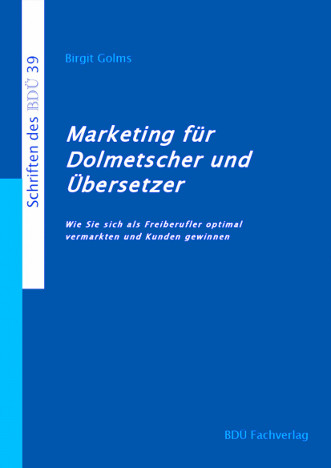 As the German title says, this practical little book is a basic guide on marketing and is specifically tailored to the needs of translators and interpreters. Although it's written for speakers of German, I expect much of what it has to say is equally applicable to other cultures as well, although marketing styles no doubt vary internationally.


Comments